

(For newcomers, I strongly recommend you first read the post “Introducing the Bible Bar Graph,” which explains
the BBG project’s purpose and scope. This post contains one of many themes I’ll be teasing out of the BBG data. – S)
It’s celebrated around the world every year: Catholics and Protestants on Dec 25, Armenian Christians on Jan 6, Eastern Orthodox believers on Jan 7, and retailers from Thanksgiving onwards. From the perspective of the Bible Bar Graph (BBG), what can we say about the significance of Christmas?
In our last installment we discovered that there can be no question of the New Testament (NT) presenting Jesus as “just an extraordinary guy.” Quite the contrary: from one end of the NT to the other, He is presented as uniquely supreme in a way that completely divorces Him from the rest of humanity.
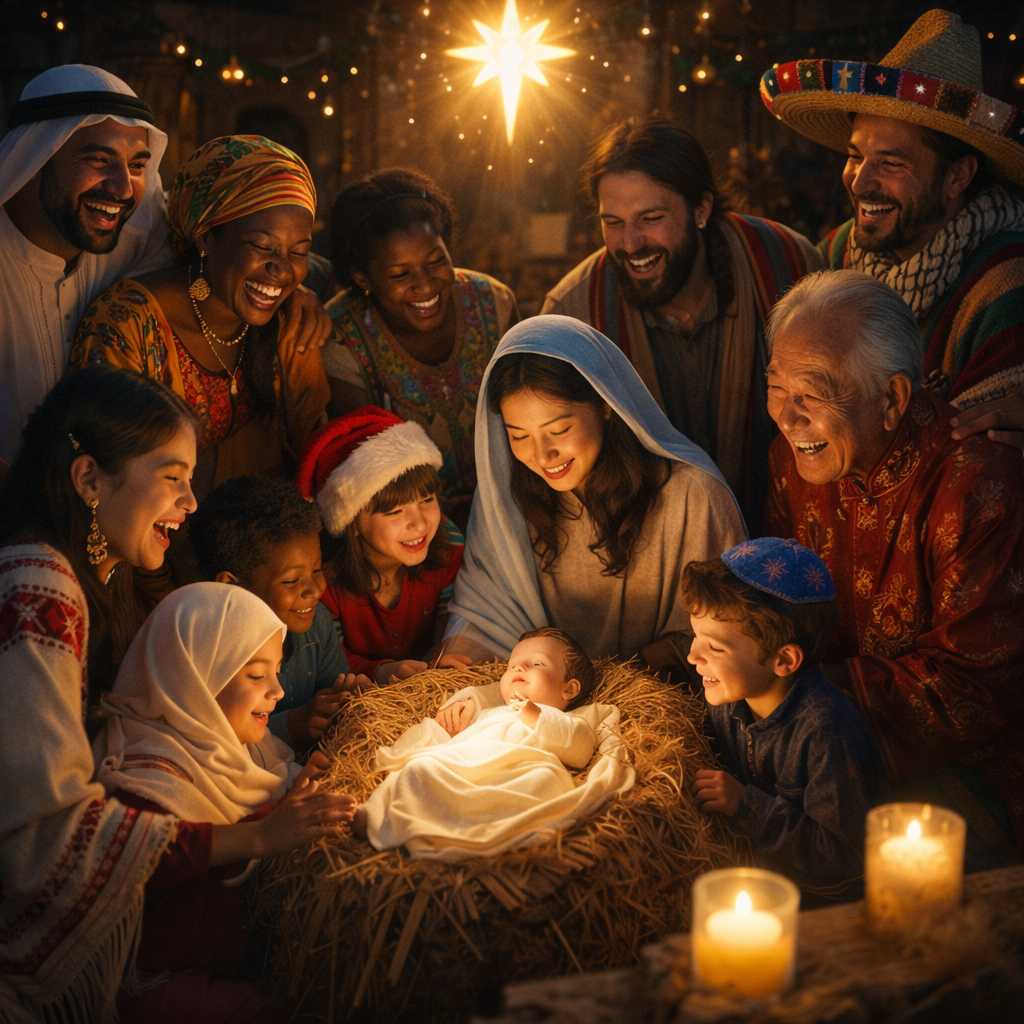
Think of it in terms of the Christmas setting (1st century Palestine). Here’s this Johnny-come-lately who is asserted to be superior to Adam (Rom. 5:14-19, 1 Cor. 15:22, 45), Abraham (John 8:53-58, Heb. 7:1-10), Moses (Heb. 3:1-6, Matt. 17:1-8), David (Mark 12:35-37, Acts 2:29-36), Solomon (Luke 11:31), and Elijah (Mark 9:2-8, Matt. 11:13-14, Luke 4:25-27). Just consider how would strike a Jewish readership! (I cringe when I hear President Trump comparing himself favorably to the likes of Washington and Lincoln. These claims would have been tenfold cringier.)
But as if that weren’t enough, today we’ll go one step (or several steps!) even further. The NT presents Jesus not only as superior to the rest of humanity, but in fact as equal to God Himself. In fact, the theme “Deity of Christ” comprises 279 verses sprawled across 21 different books, good for 9th place overall among the BBG’s 242 topics.
Incidentally, you’ll hear people casually (and confidently) state that all the “Jesus is God” stuff was made up by zealous believers over the centuries; that it’s missing from the source text. Don’t be fooled! That’s not only wrong, it’s topsy-turvy, upside-down, head-screwed-on-backwards wrong. Jesus’s Deity is not only affirmed throughout the NT; it’s front and center.
I want to begin by looking at a few verses not in the “Deity of Christ” category, and then inviting a comparison. Consider carefully these passages:
Cornelius was expecting Peter and had called together his relatives and close friends. When Peter entered, Cornelius met him and fell down at his feet and worshiped him. But Peter lifted him up, saying, “Stand up; I too am a man.” — Acts 10:24-26
And when the crowds saw what Paul (and Barnabas) had done, they lifted up their voices, saying…”The gods have come down to us in the likeness of men!” Barnabas they called Zeus, and Paul, Hermes, because he was the chief speaker. And the priest of Zeus, whose temple was at the entrance to the city, brought oxen and garlands to the gates and wanted to offer sacrifice with the crowds. But when the apostles Barnabas and Paul heard of it, they tore their garments and rushed out into the crowd, crying out, “Men, why are you doing these things? We also are men, of like nature with you, and we bring you good news, that you should turn from these vain things to the living God.” — Acts 14:14-18
I fell down at the angel’s feet to worship him, but he said to me, “You must not do that! I am a fellow servant with you and your brothers who hold to the testimony of Jesus. Worship God.” —Rev. 19:9-10
I, John, am the one who heard and saw these things. And when I heard and saw them, I fell down to worship at the feet of the angel who showed them to me, but he said to me, “You must not do that! I am a fellow servant with you and your brothers the prophets, and with those who keep the words of this book. Worship God.” — Rev. 22:8-9
Can you see what they have in common? In all these cases, created beings — whether men or angels — have a strongly negative, even visceral reaction to being worshiped. They tear their clothes and have a hissy fit. “Gah! Get up for heaven’s sake! I’m glad you like what I have to say, but worshiping me would be totally improper. God is the only proper object of worship!”
Now contrast those passages with these:
In the fourth watch of the night, Jesus came to them, walking on the sea…Jesus said to Peter, “O you of little faith, why do you doubt?” And when they got in the boat, the wind ceased. And those in the boat worshiped him, saying “Truly you are the Son of God.” — Matt. 14:25-33
Mary Magdalene and the other Mary departed quickly from the tomb with fear and great joy, and ran to tell his disciples. And behold, Jesus met them and said, “Greetings!” And they came up and took hold of his feet and worshiped him. Jesus said to them, “Do not be afraid; go and tell my brothers to go to Galilee, and there they will see me.” — Matt. 28:8-9
While (Jesus) blessed them, he parted from them and was carried up into heaven. And they worshiped him and returned to Jerusalem with great joy… — Luke 24:51-52
Jesus said to Thomas, “Put your finger here, and see my hands; and put out your hand, and place it in my side. Do not disbelieve, but believe.” Thomas answered him, “My Lord and my God!” Jesus said to him, “Have you believed because you have seen me? Blessed are those who have not seen and yet have believed.” — John 20:26-29
Jesus found (the man who had been born blind) and said to him, “Do you believe in the Son of Man?”… He said, “Lord, I believe,” and he worshiped him. Jesus said, “For judgment I came into this world, that those who do not see may see, and those who see may become blind.” — John 9:35-39
and one more, since it’s Christmas:
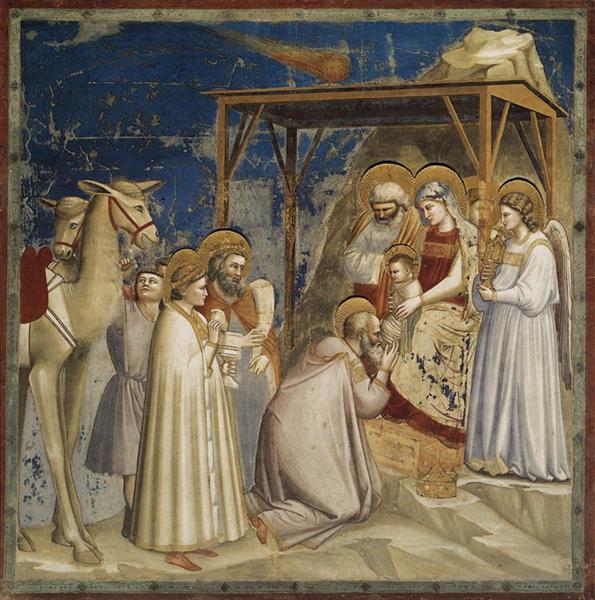
After Jesus was born in Bethlehem of Judea in the days of Herod the king, behold, wise men from the east came to Jerusalem, saying, “Where is he who has been born king of the Jews? For we saw his star when it rose and have come to worship him. … And behold, the star that they had seen when it rose went before them until it came to rest over the place where the child was. When they saw the star, they rejoiced exceedingly with great joy. And going into the house, they saw the child with Mary his mother, and they fell down and worshiped him. (Matt. 2:1-2, 9-11)
The silence is deafening. Conspicuously absent from all these passages is any signal from Jesus (or the narrator) that worshiping Him is inappropriate. Instead of rebuking and redirecting His worshipers, Jesus either quietly accepts, or outright affirms them. Only one conclusion can possibly be drawn: incredibly, Jesus believed that it was entirely fitting and acceptable for Him to be worshiped. That is strong testimony indeed about His view of Himself.
Remember, too, the setting. We’re in a 1st Century Jewish culture, folks, where the lessons “there is one and only one God” and “you’d better not give your allegiance to anyone else” are baked deeply into the mindset. Every time in their history that the Jews turned to idolatry — the golden calf of Exodus; most of the book of Judges; Elijah’s challenge to the false prophets on Mt. Caramel; Isaiah, Jeremiah, and friends — it triggered catastrophe. Even for those who couldn’t remember all the Ten Commandments, it would’ve been hard for anyone to forget the very first one: “You shall have no other gods before Me.”
Bottom line: in today’s pluralistic and somewhat New Age-y culture, we throw the term “worship” around casually. That was not true of the NT’s readership. Any hint that human beings were “worshiping” anything other than the true God would have been a three-alarm fire, as evidenced by the above reactions of Paul, Peter, and others. Yet here we have, in that second group of passages, Jesus calmly accepting the worship of others as though it were perfectly fitting. The Son of God has arrived indeed!
On this Christmas morning, let’s stand in awe of the God Who Became Man on this day.
….there is one God, the Father, from whom all things are, and we exist for him; and one Lord, Jesus Christ, through whom are all things, and we exist through him. — 1 Cor. 8:6
We know that the Son of God has come and has given us understanding, so that we may know him who is true; and we are in him who is true, in his Son Jesus Christ. He is the true God and eternal life. — 1 John 5:20
…the appearing of our Lord Jesus Christ, which he will display at the proper time — he who is the blessed and only Sovereign, the King of kings and Lord of lords, who alone has immortality, who dwells in unapproachable light… — 1 Tim. 6:14-16
To those who have obtained a like precious faith with us in the righteousness of our God and Savior Jesus Christ: Grace to you and peace be multiplied in the knowledge of God and of Jesus our Lord. — 2 Pet. 1:1-2
Peter said, “…you denied the Holy and Righteous One, and asked for a murderer to be granted to you, and you killed the Author of life, whom God raised from the dead. To this we are witnesses.” — Acts 3:14-15
Peter said, “…Jesus Christ — he is Lord of all…” —Acts 10:36
He is the image of the invisible God, the firstborn of all creation. For by him all things were created, in heaven and on earth, visible and invisible, whether thrones or dominions or rulers or authorities — all things were created through him and for him. And he is before all things, and in him all things hold together. And he is the head of the body, the church. He is the beginning, the firstborn from the dead, that in everything he might be preeminent. For in him all the fullness of God was pleased to dwell, and through him to reconcile to himself all things, whether on earth or in heaven, making peace by the blood of his cross. — Col 1:15-20
In him (Christ) the whole fullness of deity dwells bodily. — Col. 2:9
My brothers, show no partiality as you hold the faith in our Lord Jesus Christ, the Lord of glory. — James 2:1
….(The Father of Glory) raised Christ from the dead and seated him at his right hand in the heavenly places, far above all rule and authority and power and dominion, and above every name that is named, not only in this age but also in the one to come. — Eph. 1:19-21
Long ago, at many times and in many ways, God spoke to our fathers by the prophets, but in these last days he has spoken to us by his Son, whom he appointed the heir of all things, through whom also he created the world. He is the radiance of the glory of God and the exact imprint of his nature, and he upholds the universe by the word of his power. After making purification for sins, he sat down at the right hand of the Majesty on high, having become as much superior to angels as the name he has inherited is more excellent than theirs. For to which of the angels did God ever say, “You are my Son, today I have begotten you“? Or again, “I will be to him a father, and he shall be to me a son“? — Heb. 1:1-5
In the beginning was the Word, and the Word was with God, and the Word was God. He was in the beginning with God…The Word became flesh, and lived among us. We saw his glory, such glory as of the one and only Son of the Father, full of grace and truth. — John 1:1-2, 14
These will war against the Lamb, and the Lamb will overcome them, for he is Lord of lords and King of kings… — Rev. 7:14
Jesus said to her, “I am the resurrection and the life.” — John 11:25
Jesus said…”No one knows the Son except the Father, and no one knows the Father except the Son and anyone to whom the Son chooses to reveal him.” — Matt. 11:27
Jesus said to them, “The Son of Man is the Lord of the Sabbath.” — Luke 6:5
And compare:
“I am the Alpha and the Omega,” says the Lord God, “who is and who was and who is to come, the Almighty.” — Rev. 1:8
with:
“I (Jesus) am the Alpha and the Omega, the first and the last, the beginning and the end.” — Rev. 22:13 (w/ v.16)
Finally, consider the reaction of the Jews when Jesus makes each of these claims:
Jesus said to the paralytic, “Son, your sins are forgiven.” Now some of the scribes were sitting there, questioning in their hearts, “Why does this man speak like that? He is blaspheming! Who can forgive sins but God alone?” Immediately Jesus said to them, “the Son of Man has authority on earth to forgive sins.” — Mark 2:1-5
Jesus said, “Your father Abraham rejoiced that he would see my day. He saw it and was glad.” So the Jews said to him, “You are not yet fifty years old, and have you seen Abraham?” Jesus said to them, “Truly, truly, I say to you, before Abraham was, I am.” Therefore they took up stones to throw at him… — John 8:56-59
Jesus said, “I and the Father are One.” The Jews picked up stones again to stone him. Jesus answered them, “I have shown you many good works from the Father; for which of them are you going to stone me?” The Jews answered him, “It is not for a good work that we are going to stone you but for blasphemy, because you, being a man, make yourself God.” — John 10:30
The high priest asked him, “Are you the Christ, the Son of the Blessed One? And Jesus said, I am, and you will see the Son of Man seated at the right hand of Power, and coming with the clouds of heaven.” And the high priest tore his garments and said, “What further witnesses do we need? You have heard his blasphemy!” — Mark 14:61-64
The modern reader tends to shrug: “aw, so Jesus says that he and God were ‘one’ — what’s the big deal? Aren’t we all ‘one’?” Jesus’ contemporaries most certainly did not interpret his words that way. At each such utterance, they were ready to drop everything and stone Him to death for blasphemy without delay.
A note to the skeptic
Let me address a caveat or two. A skeptic might quibble with some of the verses I’ve put in this category, on the grounds that they claim Jesus is “the Son of God,” rather than simply “God.” For example:
God is faithful, by whom you were called into the fellowship of his Son, Jesus Christ our Lord. — 1 Cor. 1:9
This is his commandment, that we should believe in the name of his Son, Jesus Christ, and love one another, even as he commanded. — 1 John 3:23
Grace, mercy, and peace will be with us from God the Father, and from the Lord Jesus Christ, the Son of the Father, in truth and love. — 2 John 1:3
Such quibblers might further observe that there are a small number of NT verses that use the phrase “sons of God” (or “children of God”) to refer to believers in general, such as:
Jesus said, “Blessed are the peacemakers, for they shall be called sons of God.” — Matt. 5:9
and
For all who are led by the Spirit of God are sons of God. — Rom. 8:14
Can all the references to Jesus as “the Son of” God be dismissed, therefore, on the grounds that being “a son of God” is actually common to many people? (Note that capitalization can be no guide here, since the original manuscripts were in all-Greek-caps, making no distinction between “son” and “Son.”)
I find C.S. Lewis’s thinking helpful in this. In Mere Christianity, he distinguishes between two very different ways of causing something to exist: making, and begetting (“to beget” being the old-fashioned term for “to be a parent of.”) Simply put, he says, “a man begets a son, but he makes a statue.” (Apologies to mothers who might object to the man being said to have done much of the begetting work!) In other words, any object you create is in some sense “lower” than you on the cosmic ontological scale, whereas any being you beget is of the same kind as yourself.

Thus we can say that Jesus is “the Son of God” in a very different sense than the rest of us may be. John 3:16 even uses the well-known phrase “only-begotten Son of God” to emphasize Jesus’s uniqueness in this regard. Christ, being a begotten Son, is in fact “the same category of being” that God the Father is. We, on the other hand, are merely created copies. We’re imprinted with the handiwork of the creator, to be sure, but we can never attain the “level of Sonship” that Jesus Himself has. I think this is framing is very consistent with the NT, and in fact it’s hard to think of any other framing that accounts for all the data. (Try reading the likes of Mark 3:11, Luke 9:35, and Heb. 1:5, and telling me that “son” means just “one of many created beings.”)
A second objection from our quibbler might be about the word “Lord.” After all, the Greek κύριος (“kurios”) covers a range of meaning from “Lord” to merely a respectful “Sir.” Consider John 12:21:
They came to Philip, who was from Bethsaida in Galilee, and asked him, “Sir, we wish to see Jesus.” — John 12:21
Clearly Philip is not Divine. Yet hiding behind that English word “Sir” is exactly the same Greek term used in Revelation 19:16 for “Lord of Lords.” So again, we might ask: can we dismiss verses like Acts 10:36 and say that “Lord” is just a respectful title, with no claim of Deity?
It’s a nice try, but it just doesn’t survive contact with the text. Try substituting “Sir” for “Lord” in these verses to see what I mean:
If you confess with your mouth that Jesus is Lord (Sir?) and believe in your heart that God raised him from the dead, you will be saved. — Rom. 10:9
Let all the house of Israel therefore know for certain that God has made him both Lord (Sir?) and Christ, this Jesus whom you crucified.” — Acts 2:36
…at the name of Jesus every knee will bow, in heaven and on earth and under the earth, and every tongue confess that Jesus Christ is Lord (Sir?) to the glory of God the Father. — Phil. 2:10-11
For the Lord (Sir?) himself will descend from heaven with a shout, with the voice of the archangel, and with God’s trumpet. The dead in Christ will rise first. — 1 Thess. 4:16
Like most words, κύριος covers a range of meaning, and one could possibly question a few of the verses I’ve labeled as “Deity of Christ” for this reason. But not many. The context and the sheer awe with which the early church spoke of “the Lord Jesus” argue strongly against any interpretation other than ascribing Deity to Him.
Christianity is unique among faiths in that our founder is not merely a holy man, but God Himself. This belief was entrenched among the earliest followers, as can be seen in the voluminous NT references to the fact. May this humble us as we wonder at the miracle of Christmas: the Word become flesh!
— S
Deity of Christ verses:
- Matthew 2:11-11
- Matthew 3:16-17
- Matthew 4:3-3
- Matthew 4:5-5
- Matthew 9:2-7
- Matthew 11:27-27
- Matthew 14:33-33
- Matthew 16:27-27
- Matthew 17:1-8
- Matthew 19:28-28
- Matthew 21:2-3
- Matthew 24:30-31
- Matthew 25:31-45
- Matthew 26:64-64
- Matthew 27:54-54
- Matthew 28:18-20
- Mark 1:1-1
- Mark 1:11-11
- Mark 3:11-11
- Mark 5:7-7
- Mark 9:7-7
- Mark 11:3-3
- Mark 14:61-62
- Mark 15:39-39
- Luke 1:76-76
- Luke 3:21-22
- Luke 4:3-3
- Luke 4:9-9
- Luke 5:8-8
- Luke 6:5-5
- Luke 8:28-28
- Luke 9:26-26
- Luke 9:28-35
- Luke 10:22-22
- Luke 19:30-34
- Luke 21:27-27
- Luke 21:34-36
- Luke 21:35-36
- Luke 22:65-65
- Luke 22:69-71
- Luke 24:52-52
- John 1:1-2
- John 1:14-14
- John 1:18-18
- John 1:34-34
- John 1:49-49
- John 1:51-51
- John 3:13-13
- John 3:16-18
- John 3:35-35
- John 5:18-23
- John 6:68-69
- John 8:16-18
- John 8:25-26
- John 8:35-36
- John 8:56-59
- John 9:35-38
- John 10:30-30
- John 10:34-38
- John 11:4-4
- John 11:25-25
- John 11:27-27
- John 11:32-32
- John 12:44-46
- John 13:31-32
- John 14:7-11
- John 15:23-23
- John 17:1-3
- John 17:5-5
- John 17:10-11
- John 18:36-36
- John 19:7-8
- John 20:31-31
- Acts 2:25-27
- Acts 2:33-35
- Acts 3:14-15
- Acts 9:20-20
- Acts 10:36-36
- Acts 13:33-33
- Romans 1:4-4
- Romans 1:7-7
- 1 Corinthians 1:9-9
- 1 Corinthians 2:8-8
- 1 Corinthians 8:6-6
- 1 Corinthians 11:23-23
- 2 Corinthians 1:19-19
- 2 Corinthians 4:5-5
- Galatians 1:1-1
- Galatians 1:16-16
- Ephesians 1:20-23
- Ephesians 3:11-11
- Ephesians 3:21-21
- Ephesians 4:10-10
- Philippians 2:6-7
- Philippians 2:9-11
- Colossians 1:15-22
- Colossians 2:9-10
- 1 Thessalonians 1:10-10
- 1 Thessalonians 4:16-16
- 1 Timothy 1:17-17
- 1 Timothy 6:13-13
- 1 Timothy 6:15-16
- 2 Timothy 1:9-9
- Titus 2:13-13
- Hebrews 1:1-13
- Hebrews 2:3-3
- Hebrews 3:6-6
- Hebrews 5:5-5
- Hebrews 10:29-29
- James 2:1-1
- 2 Peter 1:1-2
- 2 Peter 1:16-17
- 2 Peter 2:20-20
- 2 Peter 3:18-18
- 1 John 2:23-23
- 1 John 3:8-8
- 1 John 3:23-23
- 1 John 5:5-5
- 1 John 5:9-13
- 1 John 5:20-20
- 2 John 1:3-3
- 2 John 1:9-9
- Revelation 1:12-18
- Revelation 2:8-8
- Revelation 2:18-18
- Revelation 3:7-7
- Revelation 3:14-14
- Revelation 5:2-14
- Revelation 11:15-15
- Revelation 17:14-14
- Revelation 19:7-7
- Revelation 19:10-12
- Revelation 19:15-16
- Revelation 21:22-27
- Revelation 22:1-1
- Revelation 22:3-3
- Revelation 22:13-13


Leave a Reply