

(For newcomers, I strongly recommend you first read the post “Introducing the Bible Bar Graph,” which explains
the BBG project’s purpose and scope. This post contains one of many themes I’ll be teasing out of the BBG data. – S)
My wife and I went to the UMW Theatre’s performance of Godspell last week. Like most of their shows, there were a few spotty bits but otherwise strong casting and delivery. (Rob Wilcox, my favorite of the current troupe, was as always exceptional.) Our date night experience got an A.
The text of the play itself is another matter. Like other popular attempts to “sanitize” the story of Jesus’s life (Jesus Christ Superstar, The DaVinci Code, Zealot, and even Thomas Jefferson’s version of the New Testament) Godspell’s protagonist is presented as a noble but otherwise quite ordinary human being concerned with daily moral choices. There are no miracles, no confrontations with religious leaders, no resurrection, no Divine origin, and certainly no claims by Jesus to be anything other than a well-meaning dude trying his best to get along in the universe. If there’s anything special about him, it’s merely a knack for expressing commonsense life hacks in memorable illustrations.
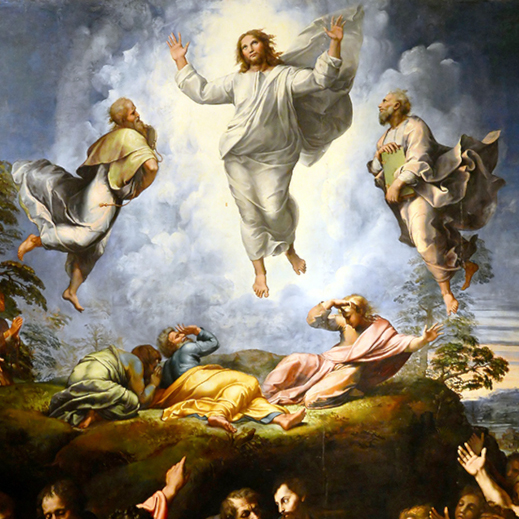
Now Godspell and these other misleading narratives would be mere annoyances if not for the fact that they have been so deeply absorbed by our culture. In fact, I’ll bet that most of our fellow viewers walking out of the show last week wouldn’t even have recognized anything wrong. If asked, “was that a pretty accurate portrayal of who Jesus really was?” they’d likely respond, “well, I’m sure there was some interpretation, and that the script wasn’t word-for-word accurate. But they got all the basic plot elements right, sure.”
Nope. Sorry. Godspell gets nothing of substance right. I cannot express how little resemblance the character in these modern renditions bears to how Jesus is presented throughout the New Testament.
Let’s return to the BBG. As you may recall, the top ten categories by overall prevalence were:

We’ll focus first on categories #2 (today’s post) and #9 (next week’s). There is definitely a lot of overlap between these, and originally I had them together as one. But over time, I realized I needed to tease them into two distinct labels:
- supremacy of Christ: Jesus is clearly represented as being in an altogether different tier than every other human being. This isn’t a difference of degree; it’s a difference of kind.
- Deity of Christ: Jesus is explicitly, or very clearly implicitly, equated with God (and in a way that no one else is).
(Many verses have both labels attached, but of course not all.)

Take a moment to let this sink in. And recall that there are 242 BBG categories overall. This means that in the top ten (top 4.1%) of all topics present in the NT are two of them which involve Jesus being categorically “other” than the rest of humankind. This simply can’t be missed.
Looked at another way, it works out to about 5% of all verses that are tagged with one or both of these labels. So, take any random 20-verse passage in the NT, and on average you’ll hit at least verse that makes these extraordinary claims about Him. And many of them are words from Jesus’s own lips.
The Jesus of Godspell — who meekly presents himself as neither supreme nor Divine — is thus flat-out at odds with the NT message. I wish that instead of calling the character “Jesus,” the playwright had just named him “Bob.” That would be far more accurate.
How do people get this so wrong?
Let’s take a brief tour of (just a few!) representative verses. There’s overlap, but I’ll try to group them into themes:
Claims of unique union with God
Even before examining the concept of “Trinity” (next week) we see NT assertions that God’s relationship with Jesus is unequivocally closer than it is with anyone else.
Jesus said,“All things have been handed over to me by my Father. No one knows the Son except the Father, and no one knows the Father except the Son and anyone to whom the Son chooses to reveal him.” — Matt. 11:27
When Jesus also had been baptized and was praying, the heavens were opened, and the Holy Spirit descended on him in bodily form, like a dove; and a voice came from heaven, “You are my beloved Son; with you I am well pleased.” — Luke 3:21-22
Jesus told this parable: “A man planted a vineyard and let it out to tenants and went into another country for a long while. When the time came, he sent a servant to the tenants, so that they would give him some of the fruit of the vineyard. But the tenants beat him and sent him away empty-handed. And he sent another servant. But they also beat and treated him shamefully, and sent him away empty-handed. And he sent yet a third. This one also they wounded and cast out. Then the owner of the vineyard said, ‘What shall I do? I will send my beloved son; perhaps they will respect him.’ But when the tenants saw him, they said to themselves, ‘This is the heir. Let us kill him, so that the inheritance may be ours.’” — Luke 20:9-14
Claims of exclusivity
Jesus unabashedly says “my way or the highway.”
Jesus said, “Whoever is not with me is against me, and whoever does not gather with me scatters.” — Matt. 12:30
Jesus said to him, “I am the way, and the truth, and the life. No one comes to the Father except through me.” — John 14:6
Jesus instructed them, “everyone who acknowledges me before men, I also will acknowledge before my Father who is in heaven; but whoever denies me before men, I also will deny before my Father who is in heaven.” — Matt. 10:32-33
Peter, filled with the Holy Spirit, said to them… “This Jesus is the stone that was rejected by you, the builders, which has become the cornerstone. And there is salvation in no one else, for there is no other name under heaven given among men by which we must be saved.” —Acts 4:11-12
A distinct origin
There’s a separate BBG category devoted to this, but it’s relevant here to point out the consistent attribution of Jesus to a mysterious, heavenly origin.
John the Baptist replied, “You yourselves bear me witness, that I said, ‘I am not the Christ, but I have been sent before him.’ … He who comes from above (Jesus) is above all. He who is of the earth (John the B) belongs to the earth and speaks in an earthly way. He who comes from heaven is above all.” — John 3:27-31
Jesus answered, “Everyone who has heard and learned from the Father comes to me — no one has seen the Father except he who is from God; only he has seen the Father.” — John 6:45-46
Peter addressed the people: “you denied the Holy and Righteous One, and asked for a murderer to be granted to you, and you killed the Author of life, whom God raised from the dead.” — Acts 3:13-15
For by him (“God’s beloved Son”) all things were created, in heaven and on earth, visible and invisible, whether thrones or dominions or rulers or authorities — all things were created through him and for him. And he is before all things, and in him all things hold together. — Col. 1:16
Superiority to all earthly leaders and laws
In innumerable ways, the NT claims that Jesus is superior to the ancient prophets, Moses, the Old Testament Law, Gentile leaders, angels, and just about everything else.
Jesus has been counted worthy of more glory than Moses — as much more glory as the builder of a house has more honor than the house itself… Moses was faithful in all God’s house as a servant, to testify to the things that were to be spoken later, but Christ is faithful over God’s house as a son. And we are his house… — Hebrews 3:3-6
Jesus…asked his disciples, “Who do people say that the Son of Man is?” And they said, “Some say John the Baptist, others say Elijah, and others Jeremiah or one of the prophets.” He said to them, “But who do you say that I am?” Simon Peter replied, “You are the Christ, the Son of the living God.” And Jesus answered him, “Blessed are you, Simon Bar-Jonah (Peter’s full name)! For flesh and blood has not revealed this to you, but my Father who is in heaven.” — Matt. 16:13-37
So Pilate said to him, “You will not speak to me? Do you not know that I have authority to release you and authority to crucify you?” Jesus answered him, “You would have no authority over me at all unless it had been given you from above.” — John 19:10-11
Jesus said to them,“The Son of Man is Lord of the Sabbath.” — Luke 6:5
They said to the woman (at the well), “It is no longer because of what you said that we believe, for we have heard for ourselves, and we know that this is indeed the Savior of the world.” — John 4:42
Jesus continued, “Do not think that I have come to abolish the Law or the Prophets; I have not come to abolish them but to fulfill them.” — Matt. 5:17
Therefore Jesus said again, “Very truly I tell you, I am the gate for the sheep. All who have come before me are thieves and robbers, but the sheep have not listened to them. I am the gate; whoever enters through me will be saved. They will come in and go out, and find pasture. The thief comes only to steal and kill and destroy; I have come that they may have life, and have it to the full.” — John 10:7-10
Testimony of others
The general impression Jesus made on others was more than that of mere excellence, but of unrivaled supremacy.
They were astonished at his teaching, for he taught them as one who had authority, and not as their scribes. — Mark 1:22
When the centurion and those who were with him, keeping watch over Jesus, saw the earthquake and what took place, they were filled with awe and said, ‘Truly this was the Son of God!’ — Matt. 27:54
(after casting out a demon): And those in the synagogue were all amazed, and they questioned among themselves, saying, ‘What is this? A new teaching with authority! He commands even the unclean spirits, and they obey him!” — Mark 1:27
(after calming the storm): The disciples were afraid, and they marveled, saying to one another, “Who then is this, that he commands even winds and water, and they obey him?” — Luke 8:25
Power of ultimate judgment
Jesus is vested with the final authority to condemn or absolve every other human being.
Jesus said to all, “Whoever is ashamed of me and of my words, of him will the Son of Man be ashamed when he comes in his glory and the glory of the Father and of the holy angels.” — Luke 9:26
The assembly of the elders said, “If you are the Christ, tell us.” But he said to them, “If I tell you, you will not believe… But from now on the Son of Man shall be seated at the right hand of the power of God.” —Luke 22:69-71
Jesus said to them… “As the Father raises the dead and gives them life, so also the Son gives life to whom he will. For the Father judges no one, but has given all judgment to the Son, that all may honor the Son, just as they honor the Father. Whoever does not honor the Son does not honor the Father who sent him.” — John 5:21-24
Peter said… “he is the one appointed by God to be judge of the living and the dead.” — Acts 10:42
Outright ownership of humankind
Incredibly, the NT regularly refers to human beings flat-out as Jesus’s possession.
Jesus continued, “I am the good shepherd. The good shepherd lays down his life for the sheep. I know my own and my own know me, just as the Father knows me and I know the Father… I have other sheep that are not of this sheep pen. I must bring them also. They too will listen to my voice, and there shall be one flock and one shepherd.” — John 10:11-16
Jesus prayed… “I have revealed your name to the people whom you gave me out of the world. They were yours, and you gave them to me.” — John 17:6
We wait for the blessed hope — the appearing of the glory of our great God and Savior, Jesus Christ, who gave himself for us to redeem us from all wickedness and to purify for himself a people that are his very own, eager to do what is good. — Titus 2:14
You are a chosen race, a royal priesthood, a holy nation, a people for his own possession… — 1 Peter 2:9
Other miscellaneous jaw-droppingly presumptuous claims
Jesus told them… “Heaven and earth will pass away, but my words will never pass away.” — Luke 21:33
Jesus instructed them, “Whoever loves father or mother more than me is not worthy of me, and whoever loves son or daughter more than me is not worthy of me. And whoever does not take his cross and follow me is not worthy of me. Whoever finds his life will lose it, and whoever loses his life for my sake will find it.” — Matt. 10:37-39
Long ago … God spoke to our fathers by the prophets, but in these last days he has spoken to us by his Son, whom he appointed the heir of all things, through whom also he created the world. He is the radiance of the glory of God and the exact imprint of his nature, and he upholds the universe by the word of his power. After making purification for sins, he sat down at the right hand of the Majesty on high, having become as much superior to angels as the name he has inherited is more excellent than theirs. — Heb. 1:1-4
Jesus said, “You believe in God; believe also in me.” — John 14:1
Jesus said, “On the Son of Man (Jesus) God the Father has set his seal.” Then they said to him, “What must we do, to be doing the works of God?” Jesus answered them, “This is the work of God, that you believe in him whom he has sent.” — John 6:27-28
“I am the Alpha and the Omega, the first and the last, the beginning and the end.” — Rev. 22:13
Okay, okay. I’ll stop. Believe me, I could go on, and on. And on. And on. To keep this post finite, I omitted literally dozens and dozens of other verses like this. Jesus’ unique supremacy is deeply woven into the fabric of the NT, from end to end, rooted so inextricably that it can’t possibly be disentangled.
So with apologies to Thomas Jefferson and John-Michael Tebelak, the NT Jesus simply bears no resemblance to the character they imagined. The real Jesus is a unique figure, dominant, unparalleled, in an entirely different class of being than anyone else. You can believe these NT claims or you can reject them, but let’s be clear about what those claims are.

Now in the remainder of this post, I’d like to address the question of why this point is so commonly misconstrued. Jefferson and Tebelak are by no means outliers, after all. I’ll bet if you approach the average Joe in Anywhere, America, the odds are that he, too, thinks that the real Jesus was basically a Godspell-like hippy who is admired because he was a good all-around guy.
I think you’ll agree this is pretty strange. It would be like everyone knowing who Michael Jordan and Jimi Hendrix were… but thinking that Jordan was a great concert violinist, or that Hendrix was a master statesman. It’s just factually incorrect. And nobody bothers to check, so they just continue under that misconception.

The assumption seems to abound that all the “Jesus was a one-of-a-kind figure about Whom all history turns” stuff was made up by zealous followers later on… Maybe early Roman popes? Maybe some middle age dudes? Maybe preachers in the Great Awakening? Average Joe probably doesn’t think too hard about it, since any of the above can be written off as the overblown ravings of a fringe group. The NT itself, however, including many of Jesus’s own words, cannot be so easily dismissed.
I offer two explanations for this phenomenon (not mutually exclusive).
1. The Categorization Habit
People have a hard time processing things that can’t be categorized. This is a cognitive psychology thing. When we receive new perceptions, our first inclination is to reach for the category as the dominant way to organize them. You hear someone raving about a new release you hadn’t heard of. Your first thought is “wait… now is that a film? A music album? A book? A Broadway show?” We want to bucket it, capture it, tame it, and file it. Then we can assimilate it into our other knowledge and claim that we “know” it.
This is one of the principal ways our ancestors dealt with the world. See that blur over there? Is it a threat? A friend? A potential meal? We need to know the range of possible behaviors it has, and the range of possible ways we can respond. Our only guidance to this is “similar things we’ve seen in the past,” hence the urgent need to identify its category. (See Eleanor Rosch’s prototype theory, Wittgenstein’s notion of family resemblances, and more recently George Lakoff’s book Women, Fire, and Dangerous Things for the seminal work on categories as the dominative cognitive paradigm.)

Now when we encounter something that’s truly one-of-a-kind, we resist treating it as such. This is probably because doing so is no help to us: we’d be better able to process it if we could only treat it like other things of the same kind. As G.K. Chesterton explained in The Everlasting Man, the word “Jewish” is an example of this. (See! “an example” of a category! Even to explain the absence of categories, I use categories.)
What we call “Jewish” actually isn’t a single category at all — it’s a layered identity that blends religious practice (worshipping in a synagogue), cultural tradition (celebrating holidays like Hanukkah), and ethnic heritage (having Jewish ancestry regardless of observance). It refuses to sit neatly in any one box. Yet people stubbornly force it to. In discussing the Gaza conflict, people use “Jewish” to mean “politically aligned with the nation of Israel” (the opposite being “Palestinian”). On ancestry.com, people identify how much “Jewish lineage” they have (other choices being “German,” “English,” “Polish.”) In checking a religious box on a form, people use “Jewish” to mean “I believe certain doctrines” (other choices being “Christian,” “Hindu,” “Buddhist.”) It’s hard to deal with a word that really has no other parallels.

Now this is exactly the case with Jesus. The strong inclination is to stick Him in a category like “holy religious figures” and group Him with people like Muhammad, Buddha, and Laozi. That way we can mentally process Him and keep Him “in His place,” so to speak. But the problem is He doesn’t belong there. He’s much more different from those other figures than He is similar to them. There is simply no good bucket to put Him in, since there aren’t any other instances of His kind. So if we’re honest, we’re forced to invent an entirely new category (a “Singleton class,” for you object-oriented programmers) just for Him.
This is threatening business. Here comes one isolated example that jeopardizes our entire schema! If we do agree Jesus belongs in a category-of-one, we’re forced to deal with Him in a way we don’t have to if we can stick Him somewhere else. We can’t rely on the usual rules and constraints by which “holy religious figures” operate in our thinking. If He can’t be tamed like that, He becomes wild, running loose in our semantic network. And this risks upsetting the whole apple cart.
So rather than accept this uncomfortable conclusion (which may compel one to consider something like allegiance) people opt for the safer bet and just mislabel Him. Going to see Godspell can now be a bit of fun; no matter what we see on the stage, it doesn’t impact the following day.
2. Simple Self-Centeredness
My other explanation for why people misunderstand this point is more mundane. It’s merely self-centeredness. Accepting Jesus’s (or anyone’s) supremacy would entail that someone else is the center of The Story®. And most of the time, we simply cannot fathom that the narrative isn’t about us. Just try clearing your mind and then reciting to yourself: “I am not the main character! I am an extra!” Then see if you really believe it. My bet is you won’t. You’ll snap quickly back to your worldview where you are the star of the show.

Now this is an understandable error. After all, you are the center of your perceptions. Everything you’ve ever experienced has been centered on you, even if it’s hearing news from afar. For example, 9/11 didn’t happen in your immediate vicinity (hopefully), but it’s nevertheless true that your hearing about it, and your reacting to it, did. Everyone old enough can remember where they were when they heard about 9/11, or Covid shutting down their school or workplace, or the assassination attempt on Trump. The circumstances of your hearing are vivid, and probably the overriding memory, even though your hearing it wasn’t the important part. This form of experience occurring again and again, building up an aggregation of self-centered memories, undoubtedly reinforces the mistaken belief that the importance is centered on you.
I’m not sure there’s any easy trick to get oneself out of this rut of self-focus, but I’d love to hear others’ suggestions.
Anyway, this illusion can be comfortably sustained only as long as nothing challenges it. Provided that Jesus can be treated like “one of the bros,” he can be an object while we remain the subject. But what happens when reality breaks in on us, and we realize we are not primarily the observer, but the observed? Accepting Christ’s supremacy, as it is portrayed consistently throughout the NT, comes at a cost. Many who consider it flee from it in fear. There are probably many more who never stop to consider it, because putting anyone but themselves at the center of the universe is unfathomable. It simply never occurs to us.
In both of the BBG categories we’ve examined so far, our basic assumptions about significance are shaken. The hugeness of the End Times category screams, “actually, this present life isn’t it at all!” The hugeness of the supremacy of Christ category screams, “actually, you’re not the main character at all!” Most of what we think about — all day, every day — is incongruent with what actually matters most. We could view this realization as a chastisement and a sobering wake-up call…but how much better to view it as a chance to reset our perspective and take a fresh look at what’s really significant!
— S
Supremacy of Christ verses:
- Matthew 3:11-12
- Matthew 3:14-14
- Matthew 5:17-17
- Matthew 7:28-29
- Matthew 9:2-7
- Matthew 9:15-15
- Matthew 11:27-27
- Matthew 12:18-18
- Matthew 12:30-30
- Matthew 13:17-17
- Matthew 13:37-37
- Matthew 13:41-41
- Matthew 14:33-33
- Matthew 16:13-17
- Matthew 16:27-27
- Matthew 17:1-8
- Matthew 17:25-26
- Matthew 19:28-28
- Matthew 20:30-31
- Matthew 21:9-9
- Matthew 21:15-15
- Matthew 21:37-39
- Matthew 21:42-42
- Matthew 21:44-44
- Matthew 22:33-33
- Matthew 22:41-45
- Matthew 24:27-27
- Matthew 24:30-31
- Matthew 25:31-45
- Matthew 26:64-64
- Matthew 27:45-45
- Matthew 27:51-51
- Matthew 27:54-54
- Matthew 28:18-20
- Mark 1:7-8
- Mark 1:21-22
- Mark 1:24-25
- Mark 2:5-12
- Mark 2:19-20
- Mark 2:27-28
- Mark 4:41-41
- Mark 5:6-12
- Mark 5:15-15
- Mark 8:27-29
- Mark 9:2-7
- Mark 12:6-8
- Mark 12:10-11
- Mark 12:35-37
- Mark 13:26-27
- Mark 14:61-62
- Mark 15:33-33
- Mark 15:38-39
- Luke 1:76-76
- Luke 3:15-17
- Luke 3:21-22
- Luke 4:21-21
- Luke 4:32-32
- Luke 4:36-37
- Luke 5:8-8
- Luke 5:34-34
- Luke 6:5-5
- Luke 6:47-47
- Luke 7:6-8
- Luke 8:25-25
- Luke 8:28-28
- Luke 9:20-20
- Luke 9:26-26
- Luke 9:28-35
- Luke 10:22-24
- Luke 11:21-22
- Luke 17:24-24
- Luke 17:30-30
- Luke 18:38-39
- Luke 18:41-41
- Luke 19:10-10
- Luke 19:40-40
- Luke 20:13-14
- Luke 20:17-18
- Luke 20:39-39
- Luke 20:41-44
- Luke 21:27-27
- Luke 21:33-33
- Luke 22:69-71
- Luke 23:39-39
- Luke 23:42-43
- Luke 23:44-45
- Luke 24:19-19
- John 1:15-15
- John 1:20-20
- John 1:23-23
- John 1:26-27
- John 1:29-31
- John 1:33-33
- John 1:36-37
- John 3:26-31
- John 4:10-10
- John 4:25-26
- John 4:29-29
- John 4:42-42
- John 5:22-23
- John 5:26-27
- John 5:35-36
- John 5:47-47
- John 6:27-27
- John 6:29-29
- John 6:33-35
- John 6:46-46
- John 6:48-48
- John 6:68-69
- John 7:37-37
- John 8:12-12
- John 10:2-4
- John 10:7-9
- John 10:11-15
- John 12:13-15
- John 12:26-26
- John 12:28-30
- John 12:35-35
- John 13:13-14
- John 14:1-1
- John 14:4-7
- John 15:1-1
- John 15:5-6
- John 15:18-18
- John 16:33-33
- John 17:2-2
- John 19:11-11
- John 19:19-19
- Acts 2:33-35
- Acts 3:13-15
- Acts 3:22-24
- Acts 4:11-12
- Acts 5:31-31
- Acts 7:52-52
- Acts 10:42-42
- Acts 13:23-23
- Acts 13:25-25
- Acts 19:4-4
- Acts 19:13-13
- Acts 19:15-15
- Acts 22:14-14
- Romans 1:6-6
- Romans 5:15-19
- 1 Corinthians 2:2-2
- 1 Corinthians 2:8-8
- 1 Corinthians 3:5-5
- 1 Corinthians 3:11-11
- 1 Corinthians 8:6-6
- 1 Corinthians 11:3-3
- 1 Corinthians 11:23-23
- 1 Corinthians 15:20-27
- 1 Corinthians 15:47-49
- 2 Corinthians 1:2-2
- 2 Corinthians 1:19-20
- 2 Corinthians 3:14-14
- 2 Corinthians 3:16-16
- 2 Corinthians 4:4-4
- 2 Corinthians 4:5-5
- 2 Corinthians 5:10-10
- 2 Corinthians 5:18-18
- Galatians 1:11-12
- Ephesians 1:20-23
- Ephesians 2:20-22
- Ephesians 3:8-8
- Ephesians 3:11-11
- Ephesians 3:21-21
- Ephesians 4:10-10
- Ephesians 6:23-24
- Colossians 1:15-22
- Colossians 2:6-6
- Colossians 2:9-10
- Colossians 2:15-15
- Colossians 2:17-17
- 1 Timothy 1:1-1
- 1 Timothy 2:5-5
- 1 Timothy 6:15-16
- 2 Timothy 4:1-1
- Titus 1:1-1
- Titus 1:4-4
- Titus 2:13-13
- Titus 3:6-6
- Hebrews 1:1-13
- Hebrews 2:5-8
- Hebrews 3:3-6
- Hebrews 7:4-7
- Hebrews 7:16-17
- Hebrews 7:20-28
- Hebrews 8:3-7
- Hebrews 9:8-15
- Hebrews 9:23-28
- Hebrews 10:1-1
- Hebrews 10:8-10
- Hebrews 10:12-14
- Hebrews 10:29-29
- Hebrews 12:2-2
- Hebrews 13:8-8
- Hebrews 13:10-10
- Hebrews 13:20-20
- 1 Peter 3:21-21
- 2 Peter 1:16-17
- 2 Peter 3:18-18
- Jude 1:4-4
- Jude 1:25-25
- Revelation 1:5-5
- Revelation 1:7-7
- Revelation 1:12-18
- Revelation 2:1-1
- Revelation 2:12-12
- Revelation 3:1-1
- Revelation 3:7-7
- Revelation 5:2-14
- Revelation 6:1-1
- Revelation 6:3-3
- Revelation 6:5-5
- Revelation 6:7-7
- Revelation 6:9-9
- Revelation 6:12-12
- Revelation 11:15-15
- Revelation 12:5-5
- Revelation 12:10-10
- Revelation 17:14-14
- Revelation 19:7-7
- Revelation 19:10-12
- Revelation 19:15-16
- Revelation 21:22-27
- Revelation 22:1-1
- Revelation 22:3-3
- Revelation 22:13-13
- Revelation 22:16-16
Chesterton, G. K. (2007). The Everlasting Man. Hendrickson Publishers.
Lakoff, G. (2024). Women, fire, and dangerous things: What categories reveal about the mind. University of Chicago press.
Rosch, E. H. (1973). Natural categories. Cognitive Psychology, 4(3), 328–350.
Wittgenstein, L. (2009). Philosophical investigations. John Wiley & Sons.


Leave a Reply to Rachel Davies Cancel reply